Small Space Storage
Best Under-Sink Organizer for Awkward Cabinets
An under-sink cabinet is not an empty box. Supply lines, drain traps, disposals, shutoff valves, water filters, cabinet lips, and evidence of past leaks divide the space into irregular zones.
Before adding shelves, empty the cabinet and check whether moisture, staining, swelling, odor, corrosion, or dripping needs attention. Organization comes after the plumbing area is dry and accessible.
Editor
SoloFave Editorial Team
Updated
July 2026
How we picked
Leak visibility, pipe and disposal clearance, shutoff access, adjustability, removable protection, chemical safety, cleanability, and retrieval.
Quick answer
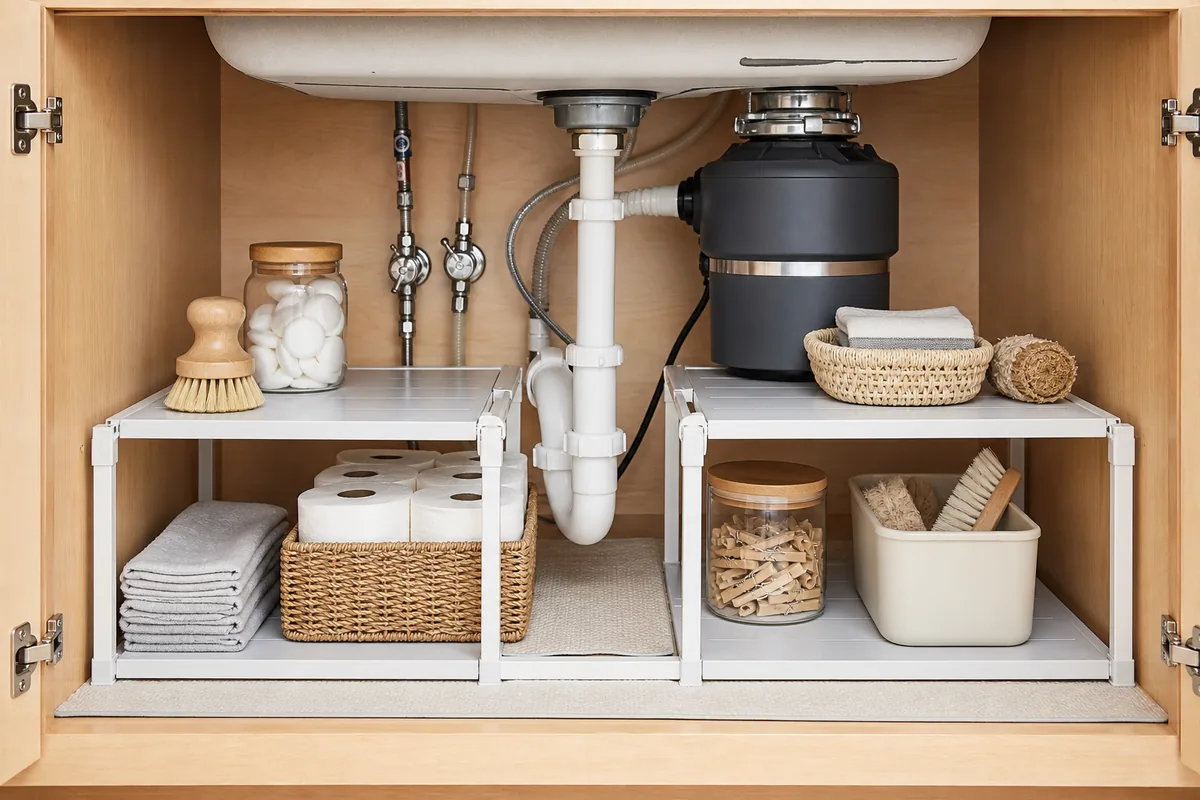
For a dry under-sink cabinet with accessible plumbing, start with an adjustable two-tier organizer that fits around obstructions and can be removed quickly during a leak.
Recommended first
The SoloFave Pick
The one solution we would try first for this specific problem.
- Product type
Adjustable two-tier under-sink organizer
- Difficulty
- Easy
- Why this pick
- It creates usable vertical storage around common plumbing obstructions while keeping categories visible and the whole unit removable for inspection or service.
Best For
- Dry kitchen or bathroom sink cabinets with measured plumbing clearance.
- Cleaning products, sponges, trash-bag rolls, toiletries, and other items permitted in that household and location.
- Cabinets where shutoff valves and service points remain visible and reachable.
- Renters who want a removable organizer rather than a screwed-in pullout.
- People who can use a suitable liner and inspect the cabinet regularly.
- Households with an appropriate child- and pet-safety plan for the stored products.
The Problem
Active leaks, damp cabinet material, or unexplained staining should not be hidden behind bins. If water is present, stop and address the source through the landlord, property manager, plumber, or other appropriate route before storing items there.
The organizer must preserve access to shutoff valves, supply connections, the drain trap, disposal reset or service area, and any filter components. A shelf that fits the empty cabinet can still block the exact point needed during a leak.
Stored products introduce their own risks. Cleaning chemicals should remain in original labeled containers, follow label storage directions, and stay separated where required. Households with children or pets may need a locked or otherwise restricted cabinet rather than relying on shelf height.
Why this is our one pick
- Adjustable shelf or side placement can work around a drain pipe or disposal better than a fixed full-width rack.
- Two levels use otherwise empty vertical space while keeping daily products visible from the cabinet opening.
- A freestanding removable unit avoids making permanent holes in the cabinet and can come out during plumbing access.
- A compatible removable liner beneath the organizer can make small drips or product residue easier to notice and clean without claiming to contain a major leak.
- The bathroom storage guide covers daily toiletries that belong on a compatible wall shelf rather than inside the plumbing cabinet.
Organizer Types We Compared
Single removable bin
A bin is simple and quick to remove during a leak, but it does not use vertical space. It works well for one category or as a secondary catch-all.
Turntable
A turntable improves access to bottles when it can rotate clear of pipes and door frames. It uses a circular footprint and may waste narrow rectangular areas.
Stackable drawers
Drawers contain small items but require straight pull-out clearance and can conceal the cabinet back. They are less flexible around low plumbing or a disposal.
Door-mounted organizer
The door offers shallow storage, but the added load, hinges, latch, interior plumbing, and closing clearance must all be compatible. Permanent mounting may require approval.
Installed pull-out system
A fitted pullout can improve access in a suitable cabinet but normally requires more precise measuring, hardware, and installation. It was not the renter-first pick.
Limitations and who should skip this
- Cabinets with an active leak, damp material, swelling, mold concern, unexplained odor, or unresolved staining.
- Layouts where any organizer would block shutoff valves, drain service, a disposal, filter, or required ventilation.
- Very shallow cabinets or plumbing layouts that leave no stable shelf footprint.
- Bulk or heavy products outside the organizer's stated load and cabinet-floor capacity.
- Food, medicines, or household chemicals whose labels require another storage condition.
- Homes where restricted products cannot be secured from children or pets.
- Situations that need a professionally installed pullout or cabinet repair.
How to set it up
Step 1: Empty and inspect
Remove everything and check pipes, valves, the cabinet floor, walls, seams, and stored containers for drips, moisture, staining, swelling, corrosion, odor, or residue.
Step 2: Resolve any active leak
Do not organize around active water. Use the appropriate landlord, maintenance, plumbing, or repair process before returning storage.
Step 3: Map protected access zones
Mark shutoffs, drain joints, disposal service points, filters, supply lines, and the route needed to reach or remove them.
Step 4: Measure the remaining space
Measure width, depth, height, cabinet lip, door swing, hinge intrusion, and the exact location of every obstruction.
Step 5: Add a removable liner and organizer
Use a compatible liner that stays flat and can be removed for cleaning. Assemble the organizer so it remains stable and can come out without disconnecting plumbing.
Step 6: Sort and load safely
Keep original labels visible, separate products according to their instructions, place suitable heavier items low, and preserve child- or pet-resistant controls where needed.
Buying Notes
Adjustable pipe clearance
Look for shelves, sides, or modules that can sit beside the trap or disposal without pressing on plumbing. Confirm the real adjustment positions and external dimensions.
Shutoff and service access
The organizer should leave valves visible and reachable and should be removable without unloading the entire room during an urgent leak.
Cabinet lip and door clearance
Measure the raised front lip, hinges, door hardware, and pull-out path. A shelf can fit inside but fail to pass through the opening.
Removable liner
Choose a smooth compatible liner or tray that lies flat, does not hide the cabinet edges, and can be removed for inspection. It is not a substitute for repairing a leak.
Materials and cleanability
Use materials compatible with normal cabinet humidity and the stored products. Smooth plastic or coated metal can be easier to inspect and wipe than absorbent fabric.
Chemical and label storage
Keep products in original labeled containers and follow each label for temperature, ventilation, separation, upright position, and child or pet access.
Load and stability
Follow the exact load instructions, distribute suitable weight low and evenly, and avoid leaning bottles against pipes or cabinet doors.
Common Mistakes
Organizing before checking for leaks
Bins can hide moisture and delay discovery. Inspect the empty cabinet first.
Blocking the shutoff valves
Do not place a fixed shelf, drawer, or large bottle in the access path needed to stop water.
Hiding the cabinet back
Overpacked storage can conceal drips and stains. Leave sightlines and make the organizer easy to remove.
Treating a liner as leak protection
A liner can simplify cleanup or reveal a small drip, but it does not repair plumbing or guarantee containment.
Removing products from original containers
Keep chemical labels, warnings, and use instructions attached to the product. Do not decant cleaners into unlabeled containers.
Relying on shelf height for child safety
Children can reach or climb in unexpected ways. Use appropriate cabinet controls and follow every product-label storage instruction.
Final Verdict
For a dry cabinet with accessible plumbing, the SoloFave Pick is an adjustable two-tier under-sink organizer. It uses vertical space while adapting around common obstructions and remaining removable for inspection or service.
Resolve leaks first, preserve shutoff and plumbing access, keep original chemical labels, and use a real child- and pet-safety plan. Choose a simpler bin or another storage zone when the cabinet cannot support those conditions.
FAQ
What is the best organizer for an awkward under-sink cabinet?
For a dry cabinet with accessible plumbing, start with an adjustable two-tier organizer that can sit around the pipes and be removed quickly. Measure the opening, cabinet lip, obstructions, and service access before buying.
Should I organize under the sink if I see water or stains?
Not until the cause is understood. Empty the cabinet and address active dripping, damp material, swelling, odor, or unexplained staining through the appropriate maintenance or plumbing process.
How much space should stay clear around shutoff valves?
There is no universal clearance. Keep each valve visible, reachable by hand or the required tool, and accessible without removing fixed hardware or disconnecting plumbing.
Should I use a liner under an under-sink organizer?
A smooth removable liner can make residue and small drips easier to notice and clean, provided it stays flat and does not hide cabinet edges. It does not replace leak repair or regular inspection.
Is it safe to store cleaning products under the sink?
Follow each product label and household safety needs. Keep original labels, required separation and ventilation, and use appropriate child- or pet-resistant cabinet controls when restricted products are stored there.
What if a two-tier organizer does not fit around the plumbing?
Use smaller removable bins, a turntable, door storage only when compatible, or another storage zone. Do not press an organizer against pipes or block service access to force a fit.
Share this fix
Copy the key takeaway with a source link, or share the full guide.
Related SoloFave Fixes
How to Add Bathroom Storage Without Drilling
Add useful bathroom storage with one ventilated no-drill shelf, after checking moisture exposure, surface compatibility, drainage, load, and removal.
Read the guideBest Pantry Organizer for Messy Cabinets
Group pantry food with clear handled bins that fit the real shelf depth, preserve package labels and dates, and do not pretend every bin is airtight.
Read the guideHow to Plan Storage for a Small Apartment
Fix the most crowded storage zone first with one adjustable freestanding shelf, then use room-specific guides for the spaces that need another solution.
Read the guideDisclosure
This page may include paid links. We may earn a commission if you buy through them, at no extra cost to you.