Small Space Storage
How to Plan Storage for a Small Apartment
A small apartment rarely has one storage problem. Shoes block the entry, cleaning products compete with plumbing, pantry packets disappear on deep shelves, seasonal items crowd the bedroom, and lightweight daily objects collect on counters.
The useful first move is to identify the zone creating the most daily friction. Solve that zone before buying a matching set of organizers for every room.
Editor
SoloFave Editorial Team
Updated
July 2026
How we picked
Storage-zone fit, footprint, vertical capacity, adjustability, stability, renter suitability, daily access, item visibility, and routing to specialized solutions.
Quick answer
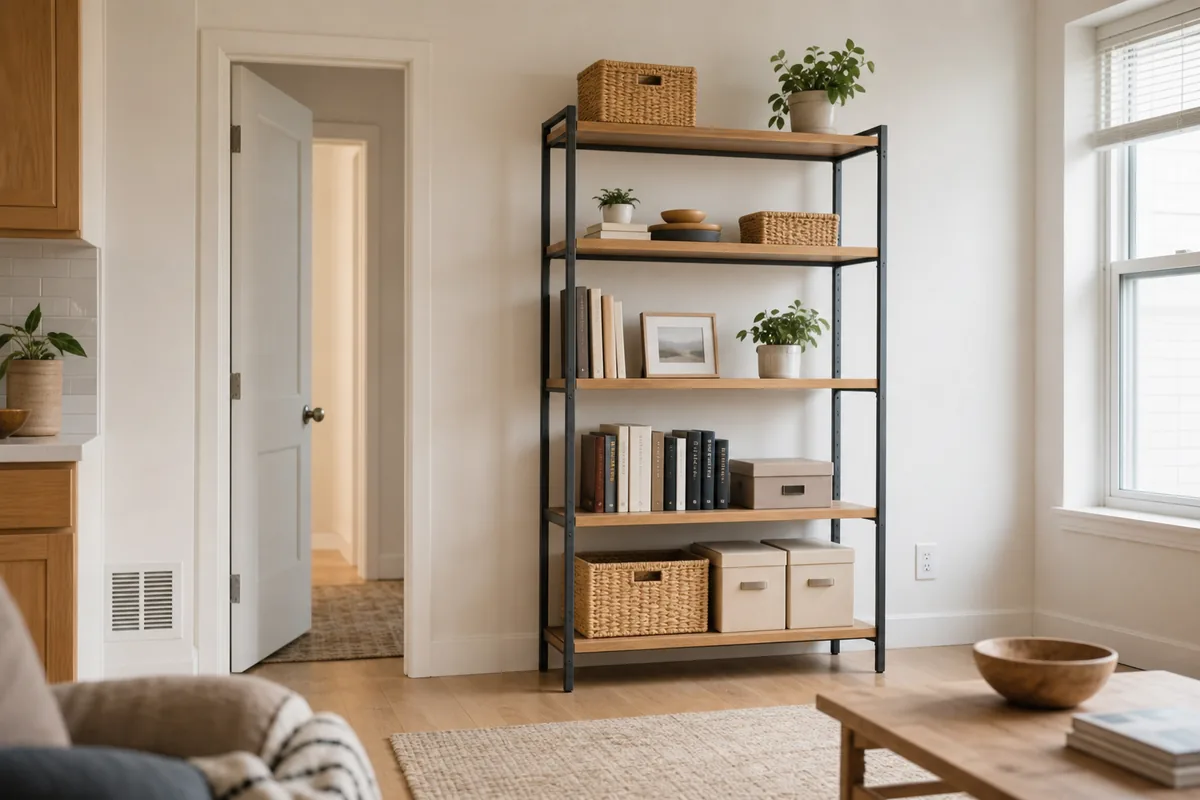
When several categories need accessible storage and one open-wall zone has safe floor, wall, and circulation clearance, start with an adjustable freestanding shelving unit; route specialized problems to their own measured solutions.
Recommended first
The SoloFave Pick
The one solution we would try first for this specific problem.
- Product type
Freestanding adjustable shelving unit
- Difficulty
- Easy
- Why this pick
- It is the default first pick when several categories need accessible storage and one open-wall zone has safe floor, wall, and circulation clearance; specialized zones still need their own solutions.
Best For
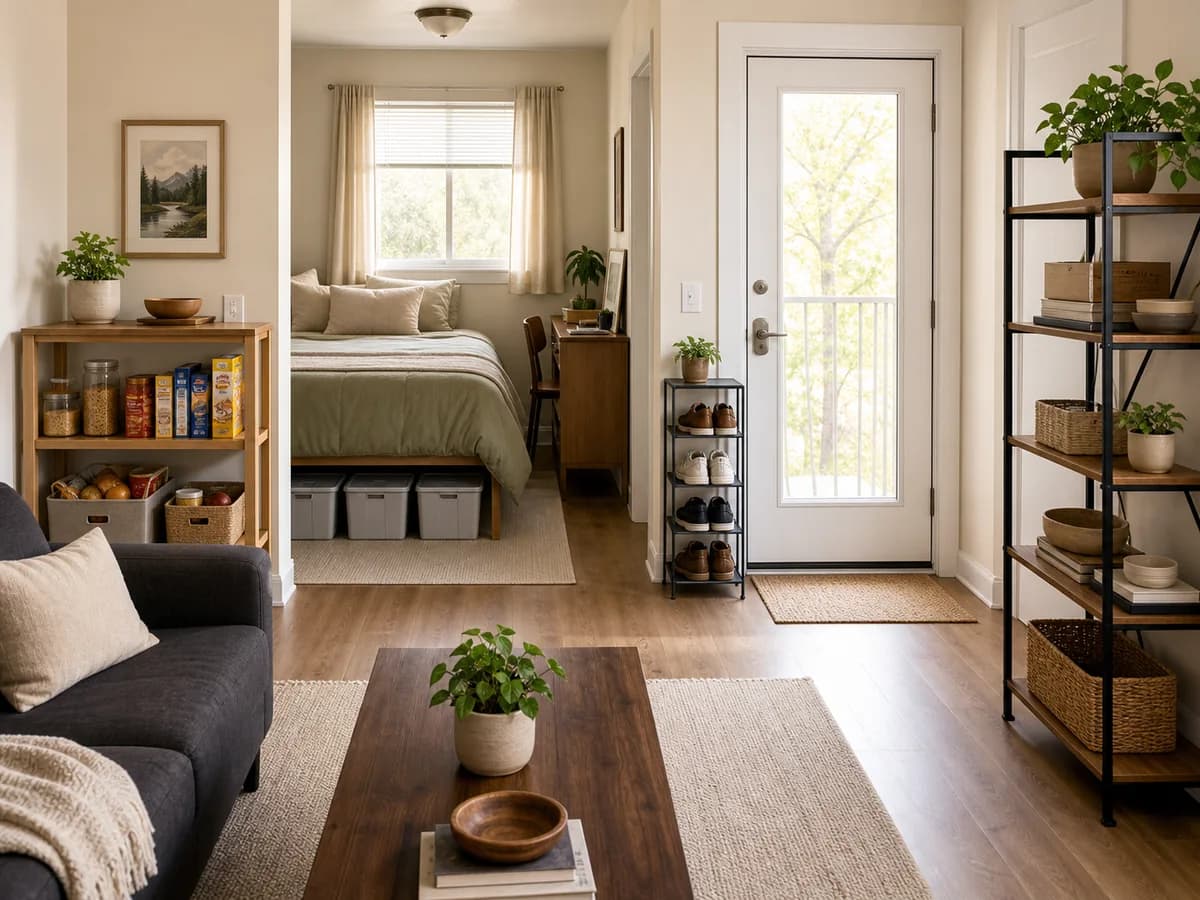
- An open-wall zone where books, baskets, office supplies, linens, or household items currently stack on the floor or furniture.
- Renters who want movable storage before considering built-ins or permanent wall systems.
- People who can group items into a few stable categories and leave frequently used items within easy reach.
- Spaces where the unit's footprint, height, shelf spacing, and load instructions fit the room.
- Households willing to address one bottleneck first rather than buying a whole-home organizer bundle.
- Units that can remain stable in normal use and follow any required anti-tip instructions.
The Problem
Generic storage advice often starts with buying containers. That can make clutter look neater without correcting where items are used, how often they are retrieved, or what physical space is available. A bin for shoes is not an under-sink shelf, and a pantry organizer should not be asked to hold seasonal bedding.
Each zone has different constraints. Under-bed storage needs height, floor protection, and retrieval clearance. Under-sink storage needs plumbing and shutoff access. An entryway needs door swing and walking clearance. A pantry needs shelf depth and food-category logic. A wall task needs a mounting method appropriate for the surface and item.
The first general product should therefore solve a common open-wall bottleneck while remaining adjustable and movable. Other zones should use their own measured solution instead of forcing the same organizer into every room.
Why this is our one pick
- It turns unused wall height into accessible storage without pretending to solve plumbing, food, shoe, or under-bed constraints.
- Adjustable shelf spacing can accommodate real categories instead of forcing every item into matching bins.
- Freestanding construction can move with the renter and can be tested in the highest-pressure zone first.
- Open shelves make duplicates and unused items visible, which helps the household refine the system before buying more containers.
- The guide deliberately routes specialized problems to under-bed storage, under-sink organization, entryway shoe storage, pantry organization, and lightweight no-drill mounting.
Storage Zones and Better-Fit Solutions
Under the bed
Use low-profile containers only after checking bed clearance, floor protection, dust, and retrieval space. The under-bed storage guide compares rigid and soft options.
Under the sink
Use an organizer that works around plumbing and preserves shutoff access. Check for leaks first with the under-sink organizer guide.
At the entry door
Use a shallow shoe solution only after measuring door swing and walking clearance. The entryway shoe guide covers stability, boots, and wet footwear.
Inside the pantry
Use bins to group compatible food categories while keeping original labels and dates visible. The pantry organizer guide covers depth and airtight-storage limits.
On a wall or vertical surface
Use adhesive only for appropriate lightweight tasks on manufacturer-approved surfaces. The lightweight no-drill guide explains when freestanding or permanent mounting is safer.
Limitations and who should skip this
- Under-bed, under-sink, pantry, or entryway problems that already have a more specific measured solution.
- Narrow routes where a shelf would reduce safe walking, door, cabinet, or appliance clearance.
- Heavy, valuable, breakable, or safety-critical items outside the unit's intended use and load instructions.
- Homes with children or pets when required stability or anti-tip provisions cannot be used.
- Uneven floors or locations where the unit cannot sit level and stable.
- People who need fully concealed storage or environmental protection from dust, moisture, pests, or light.
- Any location where the shelving would block ventilation, electrical panels, heaters, sprinklers, or emergency access.
How to set it up
Step 1: Find the highest-friction zone
Notice where items block movement, disappear, pile up, or must be moved every day. Choose one zone whose improvement would change the routine most.
Step 2: Edit the items before measuring
Remove trash, donations, duplicates, and items that belong elsewhere. Measure the real remaining categories rather than the current clutter footprint.
Step 3: Route specialized zones
Send under-bed, under-sink, entryway, pantry, and wall tasks to their specific solution before deciding that an open shelf is appropriate.
Step 4: Measure the full operating space
Check footprint, height, baseboards, outlets, doors, drawers, ventilation, walking space, shelf access, and any anti-tip location required by the product.
Step 5: Assign shelves by frequency and weight
Keep heavier suitable items low, daily items within easy reach, and occasional lightweight items higher, following the unit instructions and household safety needs.
Step 6: Review after normal use
After the household uses the shelf, adjust spacing and categories before adding more bins or another unit. Empty space is useful capacity, not a failure.
Buying Notes
Footprint and operating clearance
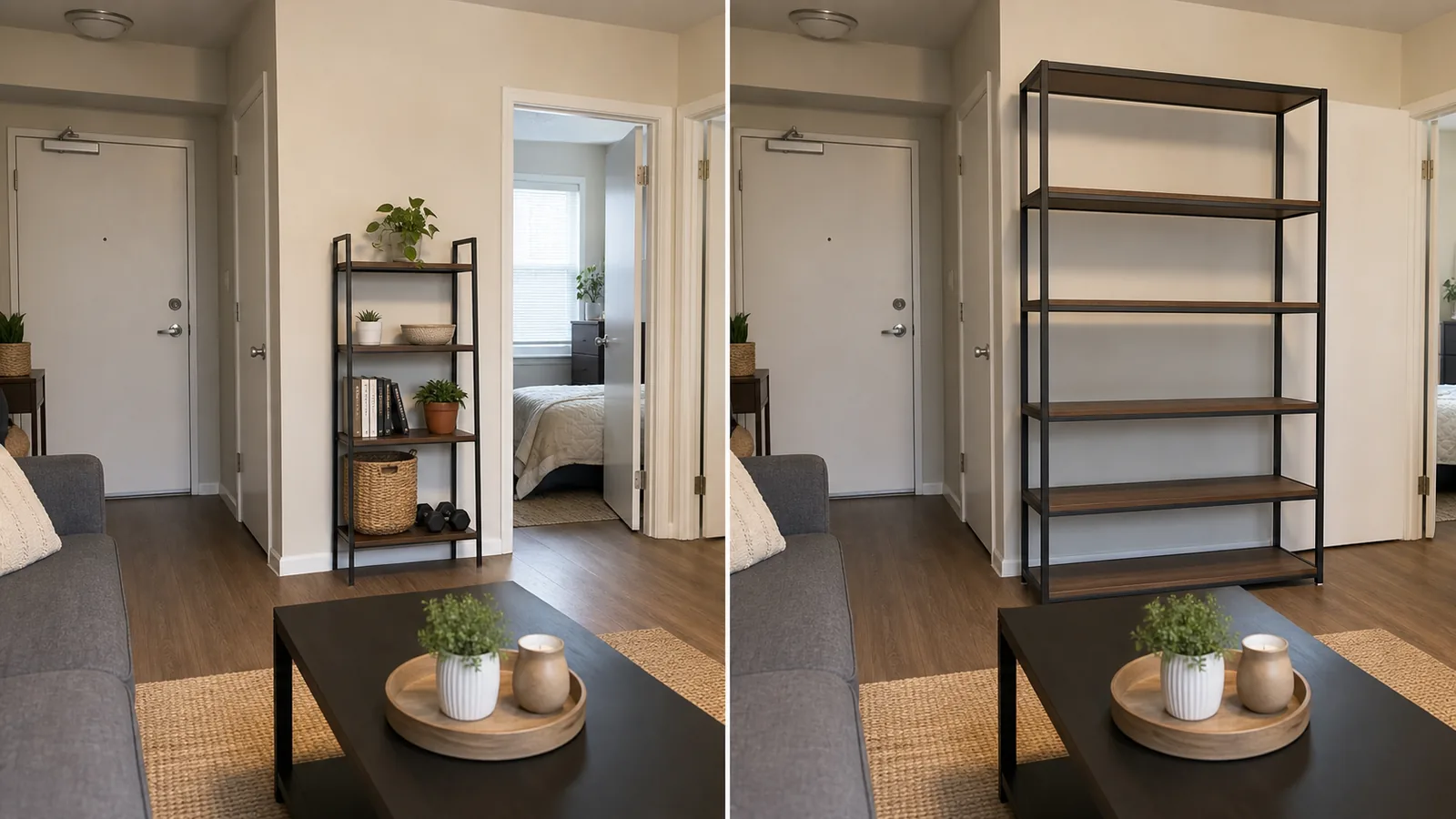
Measure the floor area plus the room needed to walk, open doors and drawers, reach outlets, and clean around the unit.
Adjustable shelf spacing
Check whether shelf positions fit the actual categories and whether adjustment requires tools or full disassembly. Do not assume adjustable means every interval is available.
Load instructions
Use the stated per-shelf and total limits for the exact assembly and load distribution. Avoid turning one listed number into a promise for uneven, moving, or concentrated loads.
Stability and anti-tip requirements
Review the base, leveling method, height-to-depth proportions, wall-clearance instructions, and any anti-tip hardware. Confirm that required anchoring is permitted and can be installed correctly.
Shelf surface and containment
Open wire, slatted, or solid shelves suit different small items and cleaning needs. Add a compatible liner or bin only when it does not change ventilation, stability, or stated use.
Visibility versus concealment
Open shelves make categories easy to see but can look busy. Use a small number of appropriately sized bins instead of hiding every item in an unlabeled container.
Move-out and reconfiguration
Check whether the unit can be disassembled, moved through doors, and rebuilt without damaged connectors or unavailable replacement parts.
Common Mistakes
Buying containers before editing
Bins can preserve duplicates and misplaced items. Reduce and regroup first so the organizer fits the real need.
Using one shelf for every storage problem
Plumbing, food, shoes, bed clearance, and wall mounting each introduce different requirements. Route the problem instead of forcing a generic organizer.
Measuring only the empty footprint
A shelf can fit the wall and still block a door, outlet, walkway, vent, drawer, or cleaning path. Measure the operating space.
Putting heavy items high
Follow the unit's loading and stability instructions and keep suitable heavier items low. Do not create a top-heavy arrangement.
Ignoring anti-tip instructions
If the product requires restraint, do not omit it. Choose another unit or obtain permission when correct installation is not possible.
Filling every shelf immediately
A completely full system has no room for groceries, laundry cycles, or changing needs. Leave practical buffer space.
Final Verdict
When several categories need accessible storage and one open-wall zone has safe floor, wall, and circulation clearance, the SoloFave Pick is one freestanding adjustable shelving unit sized for that exact location. It is a default first move, not a claim that one shelf belongs in every room.
Route specialized problems to their own measured solutions, preserve circulation and safety, and review the first zone before buying more. A small apartment works better when each storage product has a defined job.
FAQ
What is the best first storage solution for a small apartment?
If the biggest problem is an open-wall zone, start with one adjustable freestanding shelving unit sized for the real footprint and categories. Use a more specific solution when the bottleneck is under a bed, sink, entry door, pantry shelf, or wall.
Should I buy storage bins before a shelving unit?
Usually edit and group the items first. Choose the shelf around the stable categories, then add only the bins needed for small or visually busy items. This avoids buying containers that preserve clutter.
How do I decide which apartment zone to organize first?
Start where items block movement, disappear, create repeated cleanup, or slow a daily routine. One high-friction zone usually produces more value than a whole-home set of matching organizers.
When is under-bed storage better than shelving?
It is better for suitable seasonal or occasional items when the bed has enough clearance, the floor can be protected, and containers can be retrieved without moving furniture. Use the under-bed guide for the fit check.
Do renters need to anchor a tall shelving unit?
Follow the exact product instructions and household safety needs. If anti-tip restraint is required, install it correctly with permission or choose a lower, deeper, or otherwise suitable unit that can be used as directed.
How much empty space should storage leave?
Leave enough room for normal restocking, laundry cycles, and changing categories. There is no universal percentage; the system should accept routine variation without blocking access or overflowing immediately.
Share this fix
Copy the key takeaway with a source link, or share the full guide.
Related SoloFave Fixes
Best Under-Bed Storage for Small Bedrooms
Use the space under a bed with one low-profile rigid bin, while protecting the floor and keeping stored items easy to retrieve.
Read the guideBest Entryway Shoe Storage for Small Spaces
Keep daily shoes off the floor with one slim rack sized for the door swing, walkway, footwear mix, stability needs, and wet-weather routine.
Read the guideBest Pantry Organizer for Messy Cabinets
Group pantry food with clear handled bins that fit the real shelf depth, preserve package labels and dates, and do not pretend every bin is airtight.
Read the guideHow to Hang Lightweight Items Without Drilling in a Rental
Hang lightweight decor and organize cords with one removable mounting system, while avoiding surfaces and loads that make adhesive a poor fit.
Read the guideDisclosure
This page may include paid links. We may earn a commission if you buy through them, at no extra cost to you.