Small Space Storage
Best Pantry Organizer for Messy Cabinets
A pantry cabinet becomes difficult when unrelated bags, packets, boxes, jars, and backups share the same deep shelf. The first goal is to create visible food categories without hiding package labels, use instructions, allergens, lot details, or date information.
Organizer bins are category tools, not automatic food-preservation containers. Most open pantry bins do not create an airtight seal, so ingredients that need sealed storage should remain in suitable original packaging or move to a container designed for that purpose.
Editor
SoloFave Editorial Team
Updated
July 2026
How we picked
Shelf dimensions, food-category fit, label and date visibility, pull-out access, cleanability, package compatibility, restocking, and airtight-storage limits.
Quick answer
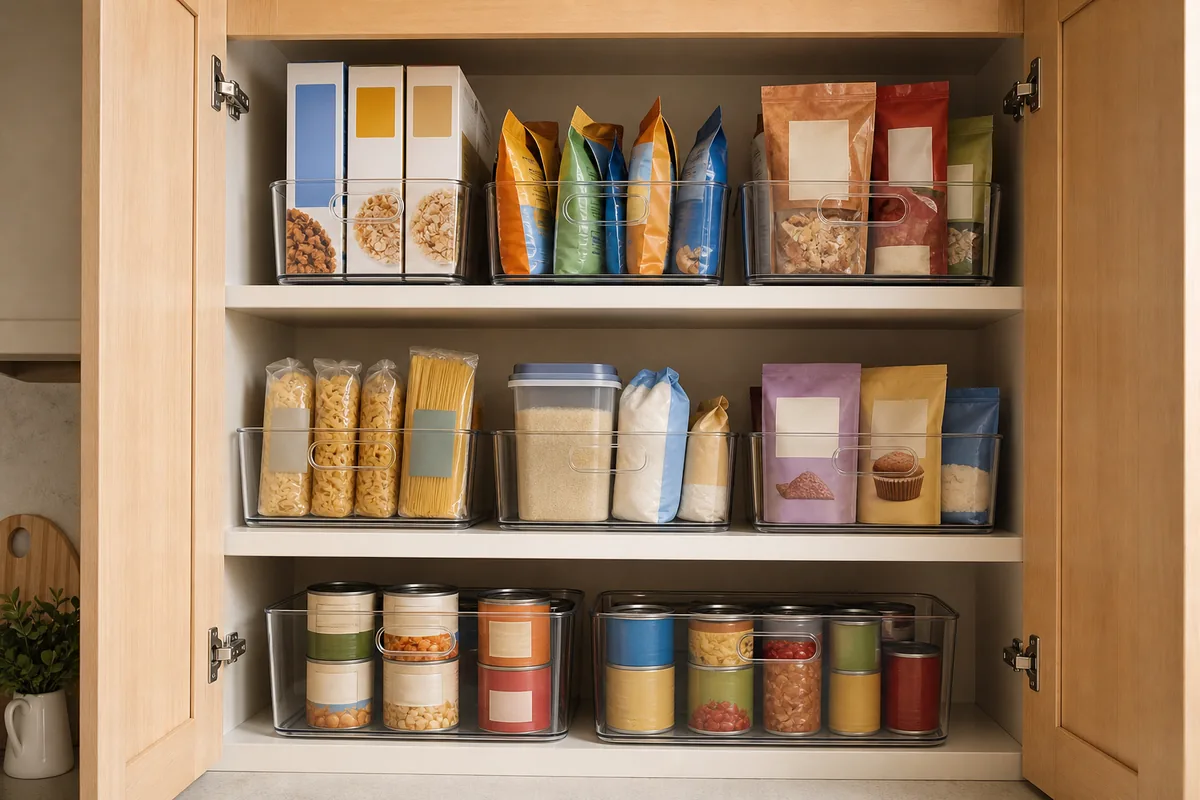
For a messy pantry cabinet, start with clear handled organizer bins sized to the real shelf depth and broad food categories, while keeping original labels and dates visible.
Recommended first
The SoloFave Pick
The one solution we would try first for this specific problem.
- Product type
Clear handled pantry organizer bins
- Difficulty
- Easy
- Why this pick
- They group broad food categories, keep contents visible, and pull forward from a shelf without requiring the household to decant every package.
Best For
- Sealed snacks, breakfast items, baking packets, backup packages, and other foods suitable for their original packaging.
- Pantry shelves and kitchen cabinets with measured width, depth, height, lip, hinge, and door clearance.
- Households using a few broad categories that match their normal groceries.
- Deep shelves where a handle improves pull-out access without making the loaded bin too heavy.
- People who want labels and dates to remain visible rather than decanting everything.
- Bins whose material and cleaning instructions suit the intended food-package contact and cabinet conditions.
The Problem
Deep shelves hide small packages behind tall boxes. Without broad categories, the household opens several bins to find one item and may buy duplicates because the backup stock is not visible. Too many tiny categories create a different problem: food no longer fits when package sizes change.
Shelf depth matters more than a styled pantry photo. A bin that is too short wastes the back of a deep cabinet; one that is too deep can strike the door, hinge, or shelf lip. Very deep shelves may work better with a full-extension drawer or turntable for certain categories.
Food storage requirements still control. Open bins can group sealed snacks, packets, breakfast items, and backup packages, but they do not automatically protect flour, grains, pet food, or other foods that need an airtight, pest-resistant, child-resistant, or otherwise specified container.
Why this is our one pick
- Clear sides reveal remaining stock before a shopping trip and reduce the need to open every container.
- Handles help retrieve categories from deeper shelves when the bin still fits the door, lip, and loaded weight.
- Broad bins can hold original packages, preserving ingredient, allergen, preparation, lot, and date information.
- The system can start with one or two problem categories instead of requiring a matching whole-pantry purchase.
- The small-apartment storage guide can place pantry work within the larger home plan, while the under-sink guide keeps cleaning chemicals in a separate measured zone.
Pantry Tools We Compared
Airtight food-storage containers
A true sealing container is better for foods that need that protection, provided it is appropriate for food contact and the contents remain clearly labeled with relevant dates and instructions. It requires decanting and maintenance.
Turntable
A turntable suits bottles, jars, oils, or condiments when it can rotate within the shelf. It uses a circular footprint and is less efficient for many rectangular boxes or packets.
Tiered shelf riser
A riser improves visibility for cans, jars, and spices but does not contain loose packets. Check loaded height and the ability to reach the back row.
Pull-out pantry drawer
A drawer can use deep cabinet space well, but it needs precise width, depth, door, hinge, and installation clearance. Permanent hardware may require approval.
Original shelf with no bins
This can work for large stable packages arranged in rows. Bins add the most value when small or flexible packages migrate and disappear.
Limitations and who should skip this
- Loose food that requires an airtight or food-contact-rated sealed container.
- Opened packages that need refrigeration, freezing, moisture control, pest protection, or another specified condition.
- Very heavy cans, glass jars, or bulk ingredients outside the bin's stated use and manageable pull-out weight.
- Very deep cabinets where a drawer, turntable, or tiered shelf gives better access to the actual category.
- Shelves where the bin blocks hinges, doors, ventilation, outlets, or appliance clearance.
- Households that would lose allergen, lot, preparation, or date information by removing original packaging.
- Food with signs of spoilage, pest activity, damaged packaging, or an unresolved cabinet moisture problem.
How to set it up
Step 1: Empty and inspect the shelf
Check for spills, pests, dampness, damaged packages, expired food according to the relevant label, and shelf conditions that need attention before organizing.
Step 2: Group by real food use
Create a few broad categories such as breakfast, snacks, baking, dinner packets, cans, or backups based on the household's groceries.
Step 3: Separate airtight-storage needs
Keep suitable foods in original packaging or choose an appropriate sealed container when the food requires one. Do not rely on an open organizer bin for preservation.
Step 4: Measure the complete shelf opening
Measure width, usable depth, height, lip, hinges, door closure, and the hand space needed to grip and pull a loaded bin.
Step 5: Load labels and dates forward
Keep original package names, allergens, preparation instructions, and date information visible. Rotate older suitable stock forward according to the product guidance.
Step 6: Test restocking
After a normal grocery trip, confirm that each category accepts routine package changes without overfilling or hiding food. Adjust labels only after the categories remain useful.
Buying Notes
Usable shelf depth
Measure from the front lip to the back obstruction and include the room needed for the door, hinges, and hand grip. Longer is not automatically better.
Food-category dimensions
Choose bin width and height around the real bags, boxes, packets, jars, and backup quantities. Mixed sizes often use space better than one matching set.
Airtight status
An open or handled organizer bin is not automatically airtight, waterproof, pest-proof, freezer-safe, microwave-safe, or approved for direct food contact. Check the exact product.
Original labels and dates
Keep manufacturer labels, allergens, preparation directions, lot information, and date markings with the food. If decanting is appropriate, transfer the information needed for safe identification and use.
Loaded handle and weight
A handle should remain comfortable when the bin contains the intended packages. Use smaller bins for heavy categories rather than creating one difficult pull-out load.
Material and cleaning
Follow the bin's food-contact and cleaning instructions. Let the bin dry as directed before returning packages, and replace cracked or difficult-to-clean organizers.
Visibility and labels
Clear sides support visual inventory, but a simple removable category label can still help. Avoid labels that hide package dates or become obsolete when groceries change.
Common Mistakes
Assuming organizer bins are airtight
Grouping and preservation are different jobs. Use an appropriate sealed container when the food requires one.
Buying a matching set before measuring
Uniform bins can waste shelf depth or fail around hinges and lips. Measure first and mix dimensions when useful.
Creating too many categories
Tiny labels can make restocking difficult when package sizes change. Start broad and split only when a category is consistently crowded.
Hiding original package information
Do not lose allergen, preparation, lot, or date information for appearance. Keep labels with the food.
Making one bin too heavy
Large bins filled with cans or jars can be hard to pull and may exceed the intended use. Use smaller stable categories for heavier items.
Ignoring shelf-depth access
A bin that fills the entire depth can still be hard to grip or may hit the door. Include hand and pull-out clearance.
Organizing around spoiled or damaged food
Address leaking packages, pests, moisture, and food that should no longer be kept before returning items to clean bins.
Final Verdict
For a messy pantry cabinet, the SoloFave Pick is clear handled organizer bins sized to the actual shelf and broad food categories. They improve visibility and pull-out access without requiring every package to be decanted.
Keep original labels and dates visible, use appropriate airtight containers only where needed, and choose another tool for very heavy, very deep, or specialized food storage. Organization should support food information, not hide it.
FAQ
What is the best organizer for a messy pantry cabinet?
Start with clear handled bins sized to the real shelf depth and a few broad food categories. Keep original package labels and dates visible and use a true sealed container only when the food requires one.
Are clear pantry organizer bins airtight?
Not automatically. Most open handled bins organize packages but do not create an airtight seal. Check the exact product and use an appropriate food-storage container when airtight protection is needed.
How deep should pantry bins be?
Match the usable shelf depth while leaving room for the front lip, hinges, door, and a hand to grip the loaded bin. A shorter bin may be more usable than one that fills the shelf but cannot be pulled out easily.
Should I remove food from its original packaging?
Only when the food and chosen container support it. Preserve the information needed to identify the product, allergens, preparation instructions, lot, and relevant dates. Do not decant solely for appearance.
How should pantry categories be organized?
Use broad categories that match normal grocery habits, such as breakfast, snacks, baking, dinner packets, cans, or backups. Split a category only when it remains consistently crowded.
What is better for deep pantry shelves: bins or turntables?
Bins suit rectangular packages and categories that can be pulled forward. Turntables suit bottles and jars when they can rotate freely. The shelf shape and food category decide, and some pantries use both.
Share this fix
Copy the key takeaway with a source link, or share the full guide.
Related SoloFave Fixes
Best Under-Sink Organizer for Awkward Cabinets
Organize an awkward sink cabinet with one adjustable two-tier unit while keeping plumbing, shutoffs, leaks, children, and cleaning access in view.
Read the guideHow to Plan Storage for a Small Apartment
Fix the most crowded storage zone first with one adjustable freestanding shelf, then use room-specific guides for the spaces that need another solution.
Read the guideHow to Choose a Peel-and-Stick Backsplash for a Rental
Plan a renter-friendly backsplash with one thicker tile-style sheet, plus practical checks for surface prep, heat, steam, outlets, seams, and removal.
Read the guideDisclosure
This page may include paid links. We may earn a commission if you buy through them, at no extra cost to you.