Small Space Storage
Best Under-Bed Storage for Small Bedrooms
The space under a bed can hold useful seasonal or occasional items, but only if the container clears the lowest frame point and can be pulled out without scraping the floor or moving other furniture.
The decision is not only rigid versus soft. Dust, floor type, item shape, access frequency, bed supports, and the room needed for retrieval determine whether under-bed storage will stay usable.
Editor
SoloFave Editorial Team
Updated
July 2026
How we picked
Usable clearance, container structure, floor contact, dust protection, item fit, retrieval path, visibility, and everyday handling.
Quick answer
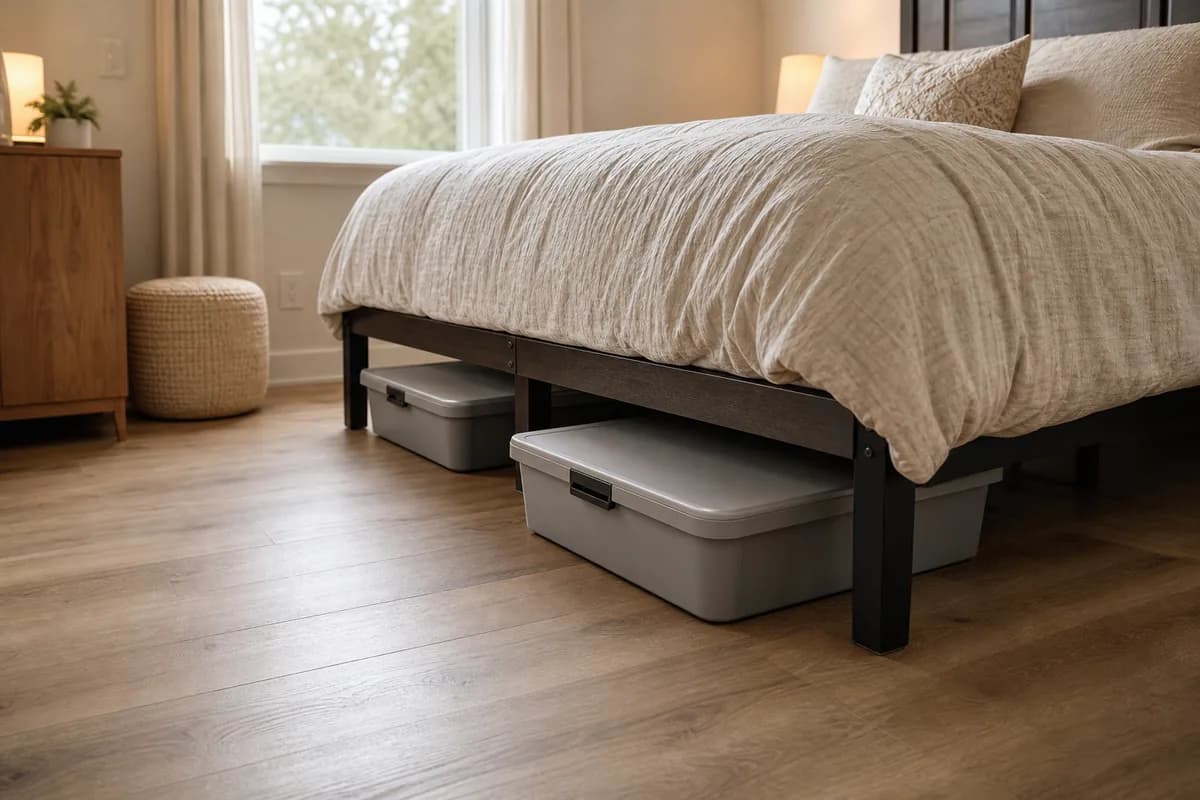
For most small bedrooms with usable clearance, start with a low-profile rigid under-bed bin that protects its contents and can be pulled out without contacting the bed frame or damaging the floor.
Recommended first
The SoloFave Pick
The one solution we would try first for this specific problem.
- Product type
Low-profile rigid under-bed storage bin
- Difficulty
- Easy
- Why this pick
- It keeps suitable seasonal and occasional items contained, holds its shape during retrieval, and makes the available under-bed zone easier to measure and use consistently.
Best For
- Seasonal clothing, spare linens, shoes in clean containers, and occasional-use bedroom items.
- Beds with measured clearance along the full insertion and retrieval path.
- Rooms with enough open floor beside the bed to pull the bin out fully.
- People who want defined categories rather than loose items pushed under the frame.
- Hard floors when the bin has smooth clean contact points or a compatible protective layer.
- Carpet when the selected base, wheels, or glides can move on that pile without excessive force.
The Problem
Listed bed height is not the same as usable storage height. Center supports, slats, bolts, fabric, sagging mattress components, uneven floors, and the container handle or lid can reduce the opening. Measure the lowest point along the full travel path.
Rigid bins protect shape and stack contents predictably, but they need enough clearance and turning room. Soft zip bags compress around textiles and can fit irregular spaces, but they may drag, collapse, snag, or become difficult to pull when overfilled.
The floor is part of the system. Hard floors can be scratched by rough wheels, grit, or sharp plastic edges; carpet can make small wheels difficult to move. A bin should use clean, smooth contact points and leave enough room to retrieve it without twisting or lifting from an awkward position.
Why this is our one pick
- A rigid bin protects clothing, linens, and similar items from direct floor contact and casual dust better than an open basket.
- Its fixed dimensions make it easier to confirm clearance before buying and to avoid an overfilled bag that no longer fits.
- A lid or covered design keeps loose contents from catching on bed supports during retrieval.
- A visible label or clear side helps distinguish categories without pulling out every container.
- It solves a specific bedroom zone while the small-apartment storage guide handles open-wall and whole-apartment decisions.
Container Types We Compared
Soft zippered storage bag
A soft bag suits bedding and clothing when clearance is tight or the opening is irregular. It is less supportive for structured items and can drag or sag when overfilled.
Wheeled rigid drawer
Wheels can improve retrieval on a compatible smooth floor, but wheel height reduces usable capacity and hard or rough wheels can mark flooring. Check carpet performance and keep contact points clean.
Vacuum storage bag
Compression can reduce textile volume, but seals can change over time and the bag offers limited structure or puncture protection. Follow the item-care and bag instructions.
Bed risers
Risers can create more space only when the bed maker, frame, floor, stability needs, and riser instructions permit them. They should not be added casually to an incompatible or already tall bed.
Limitations and who should skip this
- Beds with center supports, low rails, mechanisms, cables, or adjustable components that obstruct the storage path.
- Damp floors, pest activity, recurring leaks, or rooms where stored items need controlled environmental protection.
- Very heavy items that are difficult to pull from a low position or exceed the bin's stated use.
- Daily essentials when frequent bending and full extraction are inconvenient.
- Valuable or delicate items that need archival, locked, climate-controlled, or crush-resistant storage.
- Rooms without enough side clearance to remove the bin safely.
How to set it up
Step 1: Measure the lowest clearance
Check the perimeter and center supports, then measure the full route the bin will travel. Include the lid, handle, wheels, and any floor protector.
Step 2: Measure retrieval space
Confirm that the bin can come out far enough to open without striking a wall, dresser, door, rug edge, or another bed.
Step 3: Match rigid or soft storage
Choose rigid containment for structured or mixed items and soft containment for suitable compressible textiles when the opening demands flexibility.
Step 4: Protect the floor
Clean the floor and bin contact points. Use only a compatible smooth base, glide, wheel, or protective layer that will not bunch or obstruct movement.
Step 5: Load for retrieval
Keep the bin within its instructions, distribute suitable weight evenly, label the visible end, and place the most frequently needed bin in the easiest position.
Buying Notes
External dimensions
Use the full outside height, width, and length, including wheels, lids, hinges, handles, and raised edges. Interior capacity does not determine fit.
Rigid versus soft construction
Rigid bins hold shape and protect mixed items; soft bags flex around textiles and tight openings. Choose by contents and retrieval, not only by advertised capacity.
Floor contact
Inspect the base, wheels, seams, and edges. Smooth hard-floor contact differs from carpet movement, and trapped grit can scratch even when the bin itself looks smooth.
Lid and dust control
A fitted lid or zip closure helps with ordinary dust but is not automatically airtight, waterproof, pest-proof, or archival. Match protection to the stored item.
Handle and pull direction
The handle should be accessible from the room side and should not increase height beyond the opening. Avoid designs that require lifting the full load from a low angle.
Category and label visibility
Use one clear category per bin and place the label where it can be read under the bed. This reduces unnecessary pulling and repacking.
Common Mistakes
Measuring only at the bed edge
A bin can clear the rail and still hit a center support. Measure the entire travel path.
Ignoring floor protection
Dust, rough wheels, sharp seams, and repeated dragging can affect flooring. Keep the base and floor clean and compatible.
Overfilling a soft bag
A bag that fit when empty may bulge above the clearance or become difficult to pull. Fill to the real opening, not the nominal volume.
Storing items that are too heavy to retrieve
Low storage requires bending and pulling. Divide suitable contents into manageable loads rather than creating one difficult container.
Blocking access with other furniture
Measure the room needed to extract and open the bin before assigning the space.
Forgetting periodic inspection
Check for dust, moisture, pests, floor marks, damaged wheels, and forgotten contents during normal seasonal changes.
Final Verdict
For a small bedroom with measured clearance and a workable retrieval path, the SoloFave Pick is a low-profile rigid under-bed storage bin. It gives seasonal and occasional items a defined, covered place while keeping the fit predictable.
Choose a soft bag when suitable textiles and tight geometry make flexibility more useful, and skip under-bed storage when the floor, access, moisture, bed structure, or item weight makes retrieval impractical.
FAQ
What is the best under-bed storage for a small bedroom?
For many beds with usable clearance, start with a low-profile rigid bin that fits below the lowest obstruction and can be pulled out without damaging the floor. Use a soft bag when suitable textiles and irregular clearance make flexibility more important.
How much clearance should I leave above an under-bed bin?
Follow the real bed and container dimensions rather than a universal allowance. Leave enough space for the lid, handle, floor protector, uneven floor, and smooth movement without rubbing the frame or supports.
Are rigid bins or soft bags better?
Rigid bins hold shape and protect mixed items during retrieval. Soft bags fit compressible textiles and irregular openings but can sag, drag, or bulge. The contents, opening, floor, and access decide.
How can I protect hardwood or laminate flooring?
Keep the floor and bin base clean, avoid rough or sharp contact points, and use only compatible smooth wheels, glides, or protective material. Check periodically for trapped grit and marks.
What should not be stored under a bed?
Avoid items that are too heavy to retrieve, need locked or climate-controlled storage, can leak, attract pests, or would be damaged by dust, moisture, compression, or low-clearance handling.
How do I keep under-bed items easy to retrieve?
Measure the pull-out path, use manageable loads, label the room-facing end, keep frequently needed bins nearest the accessible side, and leave enough floor space to open the container.
Share this fix
Copy the key takeaway with a source link, or share the full guide.
Related SoloFave Fixes
How to Plan Storage for a Small Apartment
Fix the most crowded storage zone first with one adjustable freestanding shelf, then use room-specific guides for the spaces that need another solution.
Read the guideBest Entryway Shoe Storage for Small Spaces
Keep daily shoes off the floor with one slim rack sized for the door swing, walkway, footwear mix, stability needs, and wet-weather routine.
Read the guideBest Under-Sink Organizer for Awkward Cabinets
Organize an awkward sink cabinet with one adjustable two-tier unit while keeping plumbing, shutoffs, leaks, children, and cleaning access in view.
Read the guideDisclosure
This page may include paid links. We may earn a commission if you buy through them, at no extra cost to you.