Window, Light & Privacy
How to Get Nighttime Window Privacy Without Drilling
Nighttime privacy depends on what covers the glass, where someone could look from, and how indoor and outdoor light compare after dark.
For most compatible rental windows, the SoloFave Pick is an opaque no-drill privacy shade that can be lowered each night and opened again during the day.
Editor
SoloFave Editorial Team
Updated
July 2026
How we picked
Nighttime opacity, coverage from realistic sightlines, renter-friendly mounting, daily operation, hardware clearance, and room compatibility.
Quick answer
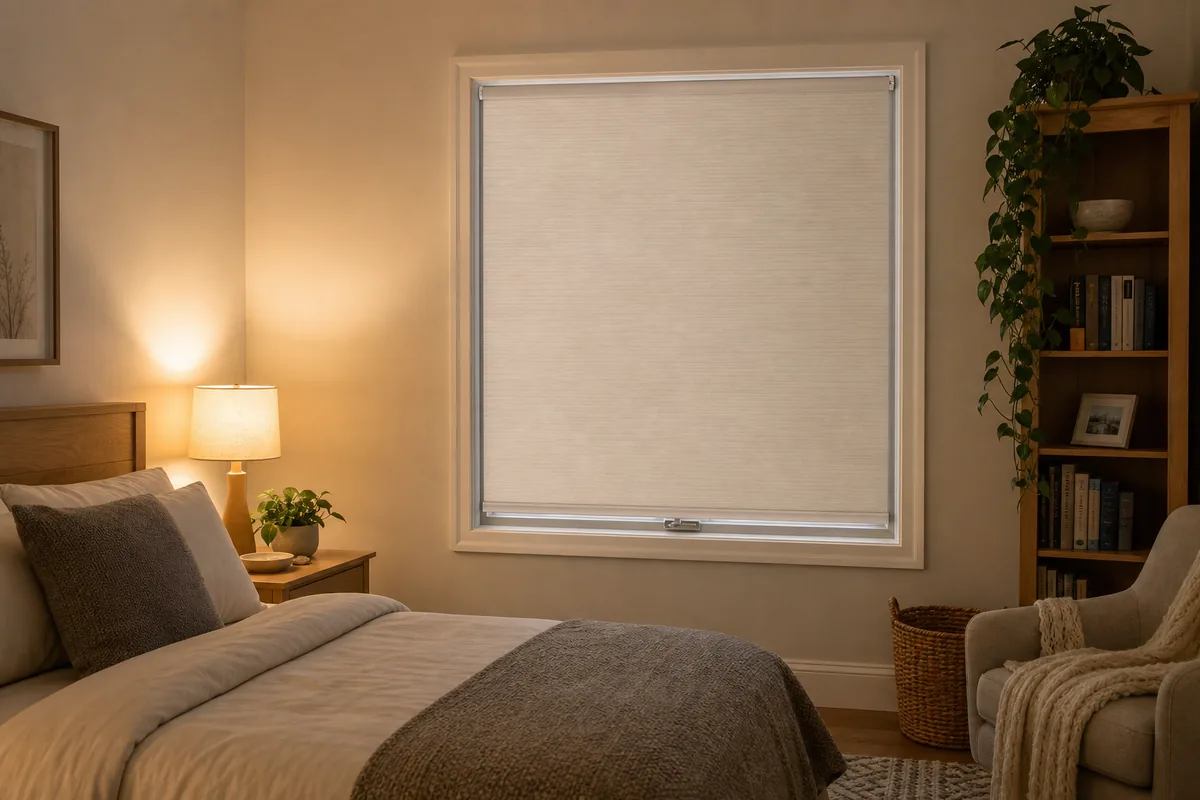
For nighttime privacy in a rental, start with an opaque no-drill privacy shade that covers the glass and the likely viewing angles.
Recommended first
The SoloFave Pick
The one solution we would try first for this specific problem.
- Product type
No-drill opaque privacy shade
- Difficulty
- Easy
- Why this pick
- It creates an adjustable opaque barrier across the glass that can be closed at night and opened again when daylight or the view matters.
Best For
- Street-facing or ground-floor rental bedrooms.
- Windows facing a shared walkway, neighboring building, or parking area.
- Rooms where indoor lights are regularly on after dark.
- Compatible bathroom windows using a material approved for the room's moisture and cleaning conditions.
- Renters who want privacy at night without keeping the window permanently covered.
- Windows that can accept a compatible no-drill mount without blocking normal operation.
The Problem
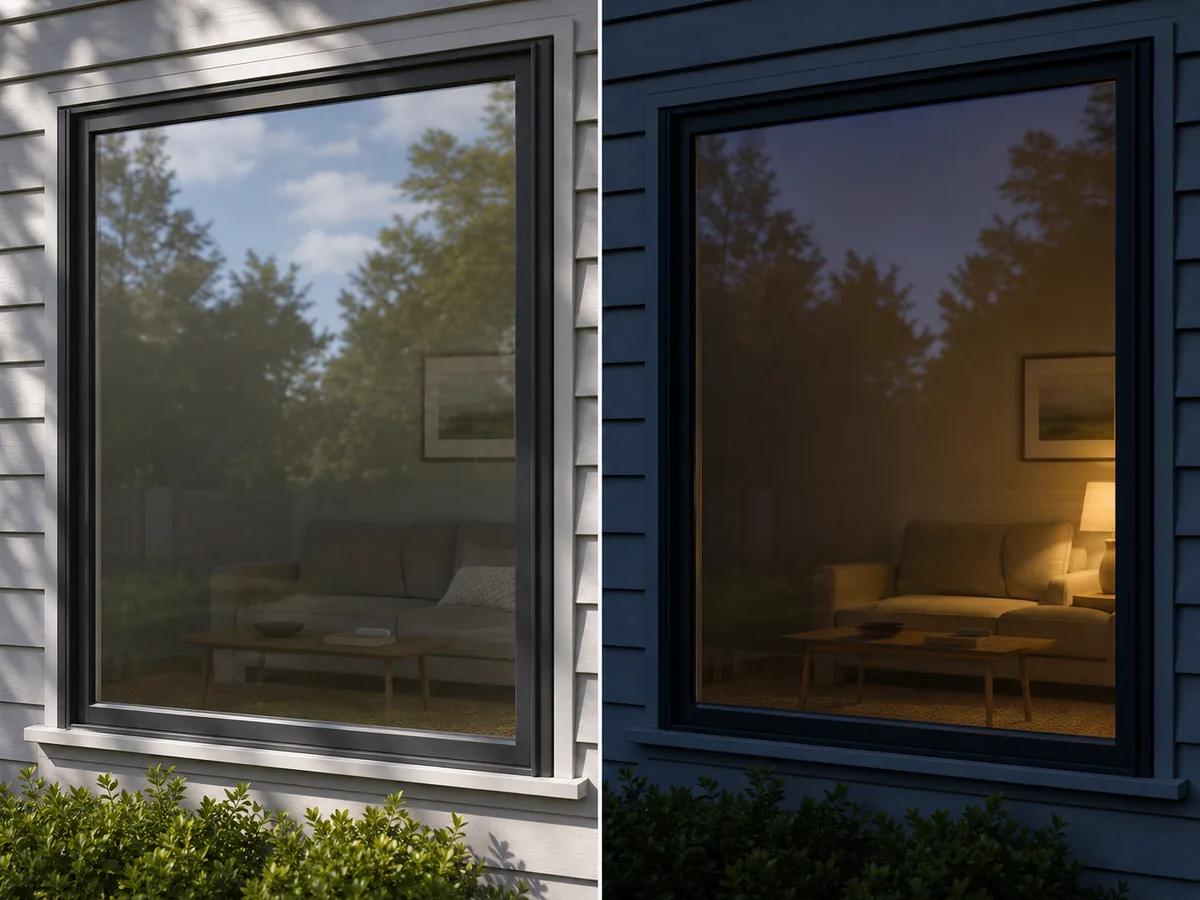
Reflective privacy films depend on the light difference between inside and outside. When indoor lighting is brighter, the privacy effect can change. For consistent nighttime privacy, physical opaque coverage is more reliable.
Privacy is also different from blackout. An opaque privacy shade blocks a direct view through its material, while a blackout shade is selected primarily for darkness. If sleep and room darkness are the main goal, use the blackout without drilling guide instead.
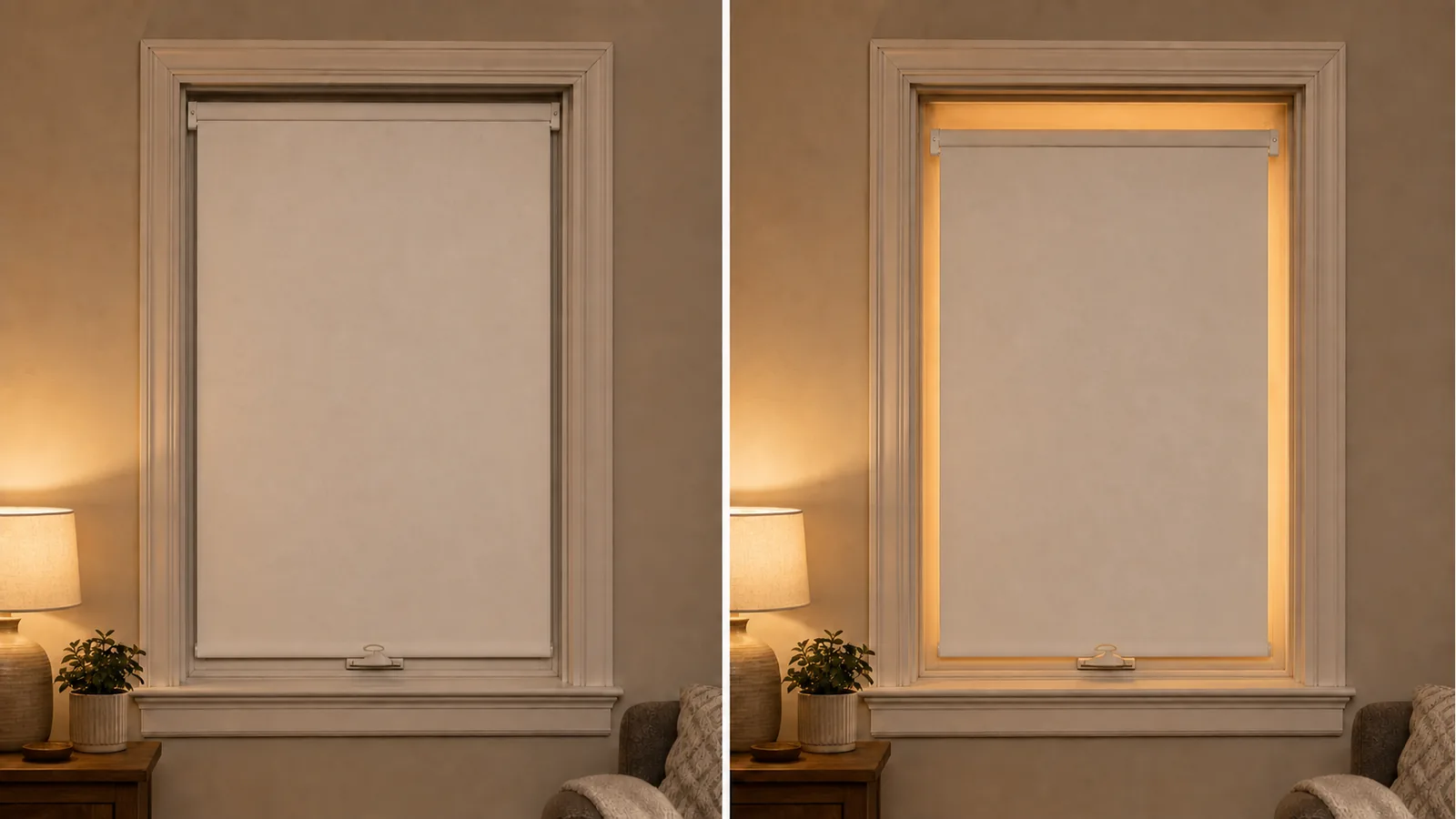
Coverage matters as much as material. A correctly lowered shade can still leave a view through side gaps, above the headrail, below the bottom rail, or around an uncovered adjacent pane. The likely sightline from a sidewalk, neighboring building, or shared walkway should guide the measurements.
Renters also need a mount that suits the frame and lease, leaves locks and emergency access usable, and can be opened and closed without becoming a nightly chore.
Why this is our one pick
- It addresses the nighttime problem directly by placing opaque material between the room and the outside view.
- It can be closed only when privacy is needed, preserving daylight and the view at other times.
- No-drill mounting may suit a rental without committing to a permanent curtain rod, provided the frame, surface, product instructions, and lease are compatible.
- A shade can be measured around realistic sightlines instead of relying only on the privacy claim attached to the fabric or film.
- It remains a limited recommendation: edge gaps, uncovered panes, difficult frames, and poor installation can still reduce privacy.
Alternatives We Rejected
Reflective daytime privacy film
Reflective privacy films depend on the light difference between inside and outside. When indoor lighting is brighter, the privacy effect can change. For consistent nighttime privacy, physical opaque coverage is more reliable.
Frosted or obscuring static-cling film
A sufficiently obscuring film can reduce a clear view through the glass in both lighting conditions. It also reduces the view from inside, may still show shapes or light, and is less adjustable than a shade.
Sheer curtains
Sheers soften daylight and add decoration, but a lit room may remain visible through them at night. They work better as a layer than as the only nighttime privacy treatment.
Blackout curtains
They can provide strong coverage when wide enough to overlap the frame. They were not the renter-first pick because the rod, brackets, wall space, and daily handling can make installation more involved.
Temporary paper shades or removable panels
They can cover glass during move-in or while waiting for a permanent decision. They are useful short-term fixes but may be less durable, convenient, or finished-looking for nightly use.
Limitations and who should skip this
- Windows that must remain completely uncovered while still providing nighttime privacy.
- Openings with multiple exposed panes that one shade cannot cover.
- Very wide windows or patio doors that exceed the supported size of the mounting system.
- Frames that are too shallow, uneven, weak, textured, or otherwise incompatible with the no-drill mount.
- Windows where the shade would block locks, handles, cranks, ventilation, or emergency egress.
- Windows where the main privacy issue comes from uncovered side, top, or bottom gaps rather than the shade material itself.
- Rooms where decorative drapery is the primary design goal.
- Situations that require a professionally specified privacy or security system.
How to set it up
Step 1: Identify the realistic sightlines
Note whether someone could view the window from directly outside, below, above, or from an angle across a sidewalk, courtyard, or neighboring building.
Step 2: Measure the full area that needs coverage
Measure the opening at the top, middle, and bottom, plus the height and usable frame depth. Include any adjacent glass or gaps that remain visible from those sightlines.
Step 3: Confirm mounting and operating clearance
Check the no-drill method against the frame, surface, lease, and product instructions. Keep locks, handles, ventilation, and emergency access usable.
Step 4: Install and test normal movement
Mount the shade as directed, lower it fully, and confirm it stays level without rubbing, shifting, or exposing an avoidable part of the glass.
Step 5: Check privacy after dark
With the room lights in their normal evening positions, inspect the window from safe and lawful exterior viewing points or ask someone you trust to check. Adjust coverage if a practical sightline remains.
Buying Notes
Choose opacity for privacy, not just a color name
Look for opaque privacy or blackout material rather than assuming a dark color, woven texture, or light-filtering label blocks a nighttime view.
Measure width at the top, middle, and bottom
Rental frames may not be square. Follow the exact product's sizing and deduction rules rather than applying a universal allowance.
Plan coverage around likely viewing angles
Inside mounts look compact but can leave side sightlines. An outside mount may overlap more of the frame when the product, wall area, and lease allow it.
Check whether edge gaps need a separate fix
If the shade material works but a narrow edge remains visible, the light-gap guide explains when removable side tracks may fit.
Match the no-drill method to the window
Tension, clips, adhesive, and other mounts have different depth, surface, and removal requirements. Compare options in the renter-friendly window covering guide.
Keep controls and emergency access clear
The headrail, fabric, and bottom rail should not block locks, handles, cranks, ventilation, or a required escape path.
Consider moisture and cleaning
For bathrooms or kitchens, confirm the material and hardware are approved for the room conditions and can be cleaned as directed.
Prefer safe daily operation
Choose a shade that is easy to close fully each night. Prefer cordless operation or follow all cord-safety requirements.
Read installation and removal instructions before buying
No-drill does not mean compatible with every frame or finish. Confirm preparation, weight and size limits, removal steps, and lease requirements.
Common Mistakes
Judging privacy only during daylight
Reflective privacy films depend on the light difference between inside and outside. When indoor lighting is brighter, the privacy effect can change. For consistent nighttime privacy, physical opaque coverage is more reliable.
Checking only from straight in front of the window
A sidewalk or neighboring window may create a diagonal sightline through a side gap that is not obvious from the center.
Ordering a shade that covers only the glass width
The usable coverage depends on the mount, rails, deductions, frame, and sightlines. Follow the maker's measuring method for the intended mounting position.
Treating the blackout label as a complete privacy plan
Opaque fabric can block a direct view through the material, but it does not cover side gaps, adjacent panes, or an incompletely lowered shade.
Ignoring how the shade will be used every night
An awkward control, blocked furniture, or difficult reach can lead to partial closure. Confirm the shade can be operated easily in the real room.
Blocking window hardware or emergency access
Do not trade privacy for unsafe operation. Keep required locks, ventilation, cranks, and egress available.
Assuming no-drill means no surface risk
Adhesive, tension, and clip systems still have compatibility and removal limits. Follow the instructions and lease instead of assuming every finish is safe.
Final Verdict
For nighttime privacy in a compatible rental window, start with a no-drill opaque privacy shade. Reflective privacy films depend on the light difference between inside and outside, while physical opaque coverage is more reliable for consistent nighttime privacy.
Measure for actual sightlines, preserve safe window operation, and check the installed result after dark. Choose another system when one shade cannot cover the opening or the frame cannot support a suitable no-drill mount.
FAQ
What is the best window privacy solution at night for renters?
For many compatible rental windows, start with an opaque no-drill privacy shade. It creates an adjustable barrier across the glass without requiring a permanent curtain-rod installation, although fit and edge coverage still matter.
Does daytime privacy film work at night?
It depends on lighting conditions. Reflective films are less predictable at night when the room is brighter than the outdoors. For consistent nighttime privacy, a physical opaque covering is more reliable.
Is a privacy shade the same as a blackout shade?
Not necessarily. An opaque privacy shade is chosen to block a direct view through the material. A blackout shade is chosen for darkness. Some shades do both, but the listing, material, fit, and uncovered gaps should be checked separately.
How wide should a privacy shade be?
It should follow the manufacturer's measuring rules and cover the likely sightlines without rubbing or blocking hardware. Measure multiple widths and consider whether an inside or outside mount gives the needed overlap.
Can renters install a privacy shade without drilling?
Yes, when a compatible tension, clip, adhesive, or other no-drill system fits the frame and lease. Check surface preparation, size limits, removal instructions, controls, and emergency access before installation.
How can I check nighttime privacy after installation?
Lower the shade fully and use the room's normal evening lights. Inspect from safe and lawful exterior positions that match realistic viewing angles, or ask someone you trust to check, then correct any practical gaps you find.
Share this fix
Copy the key takeaway with a source link, or share the full guide.
Related SoloFave Fixes
How to Black Out a Bedroom Without Drilling
Make a rental bedroom darker with one no-drill shade, while checking measurements, edge gaps, window hardware, and removal requirements.
Read the guideHow to Stop Light Leaking Around Blackout Blinds
Stop side-edge light from slipping around blackout blinds with one removable, renter-friendly fix.
Read the guideHow to Choose a Renter-Friendly Window Covering
Match the room's real window problem to one compatible no-drill covering, with clear checks for fabric, fit, mount, hardware, and removal.
Read the guideDisclosure
This page may include paid links. We may earn a commission if you buy through them, at no extra cost to you.