Window, Light & Privacy
How to Black Out a Bedroom Without Drilling
A bedroom can stay uncomfortably bright even when the existing blinds are fully closed. The useful first step is to identify whether the light passes through the covering, enters around its edges, or comes from another window or door.
Renters also need to work within the frame depth, lease, window hardware, and removal limits. Those conditions determine whether a no-drill shade is a sensible first fix or whether the room needs a different coverage plan.
Editor
SoloFave Editorial Team
Updated
July 2026
How we picked
Blackout material, measurement rules, no-drill mount compatibility, edge coverage, window operation, removal risk, and child-safety guidance.
Quick answer
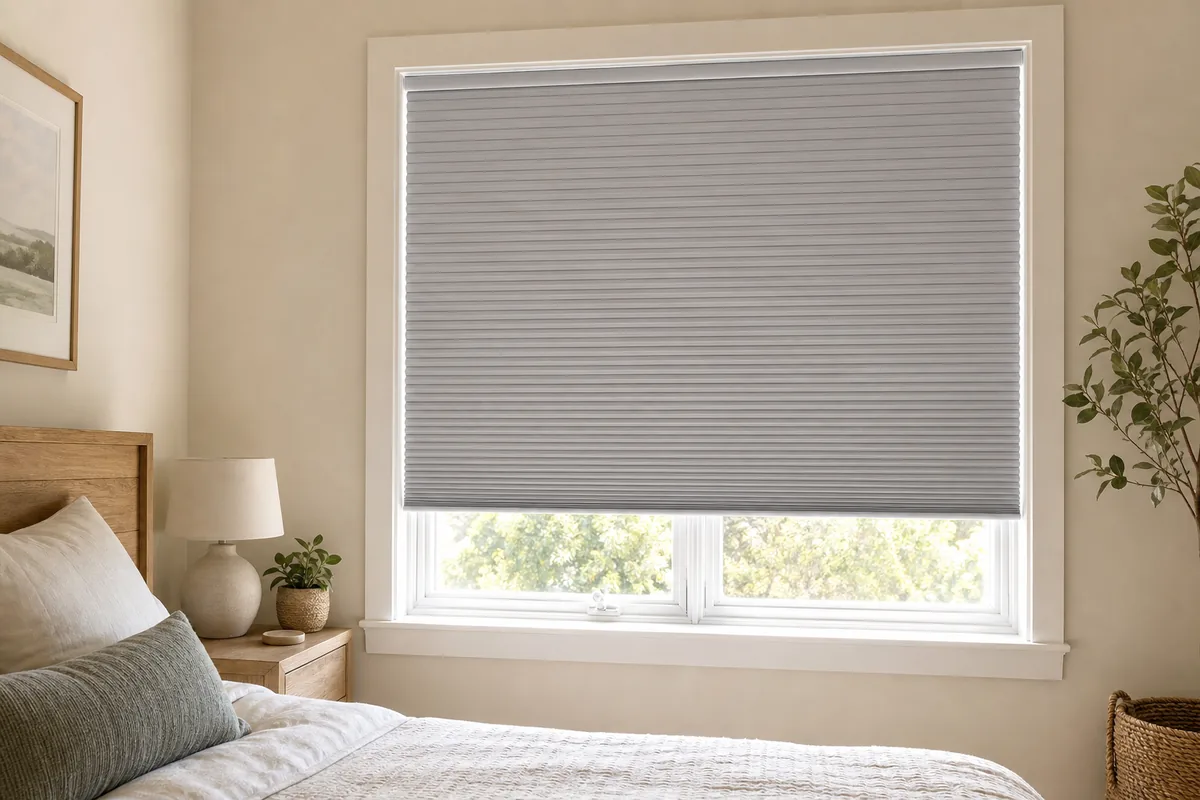
For a compatible rental bedroom, start with a no-drill blackout cellular shade measured according to the specific manufacturer's inside- or outside-mount rules.
Recommended first
The SoloFave Pick
The one solution we would try first for this specific problem.
- Product type
No-drill blackout cellular shade
- Difficulty
- Easy
- Why this pick
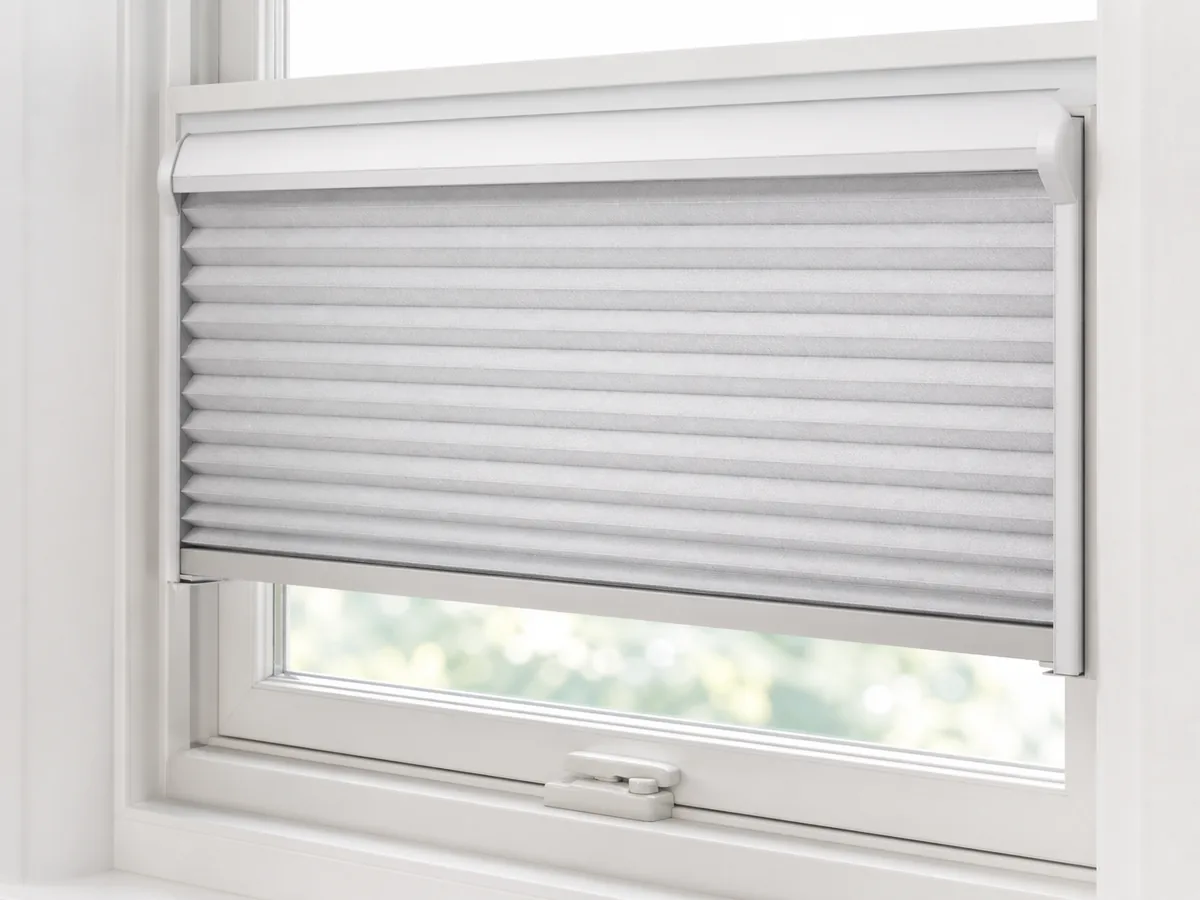
- It combines opaque fabric with an adjustable, finished-looking covering and can fit many compatible rental windows without a drilled bracket installation.
Where to buy
Best For
- Rental bedrooms with compatible window frames and no-drill mounting options.
- Rooms where light passes through or around an existing light-filtering blind.
- Windows that can keep locks, handles, ventilation, and required egress usable after installation.
- People who want an adjustable covering rather than a permanent opaque panel.
- Dorms, guest rooms, nurseries, and temporary homes where the exact product is allowed.
- Windows that fall within the selected shade's stated size and mounting limits.
The Problem
Blackout is a system, not only a fabric label. A shade can use opaque material and still leave visible light at the sides, above the headrail, below the bottom rail, or through an adjacent pane. Before buying, lower the current covering during the brightest problem period and note exactly where light enters.
The mounting method creates a second decision. Tension, compression, clip-on, and adhesive systems require different frame depths, surfaces, dimensions, and removal steps. No-drill means the product does not require a drilled fastener; it does not guarantee that every frame or finish will remain unchanged.
Window function remains non-negotiable. A shade should not block locks, handles, cranks, ventilation, required egress, or normal opening. In homes with children, use a cordless design when possible or follow the exact cord-safety instructions for the selected product.
Why this is our one pick
- It addresses the main job directly by placing opaque material across the window instead of only reducing glare.
- A cellular shade can be raised during the day and lowered for sleep, so the room does not need to remain permanently covered.
- It generally looks more finished for everyday use than a temporary paper shade or taped panel.
- Manufacturer-specific sizing and mounting instructions make the fit easier to evaluate before ordering.
- If the shade solves the center coverage but leaves narrow side gaps, the separate light-gap guide explains when removable side tracks may be appropriate.
Alternatives We Compared
Temporary paper shades
They can cover a window quickly during move-in or while waiting for a measured shade. They are less suitable as the primary pick when repeated operation, a finished appearance, and longer-term use matter.
Blackout curtains
Wide curtains can overlap the frame and help with edge light, but the rod, brackets, wall area, fabric weight, and lease rules create a separate installation decision. A compatible tension rod may work for some openings but should not be assumed to support every curtain.
Opaque removable window panel
A fitted panel can cover difficult glass and may reduce gaps, but it removes the view while installed and needs a safe place for storage. It is better for occasional use than for a window opened every day.
Privacy film
Privacy film addresses visibility through the glass, not bedroom darkness in the same way as an opaque shade. For nighttime privacy as the primary problem, use the nighttime privacy guide.
Custom drilled treatment
A professionally specified or permanently mounted treatment may fit unusual or very large windows more precisely. It was not the renter-first pick because it can require approval, drilling, a larger budget, and a longer commitment.
Limitations and who should skip this
- Windows with shallow, uneven, weak, damaged, heavily textured, or otherwise incompatible mounting surfaces.
- Openings that exceed the product's supported dimensions or need multiple coordinated panels.
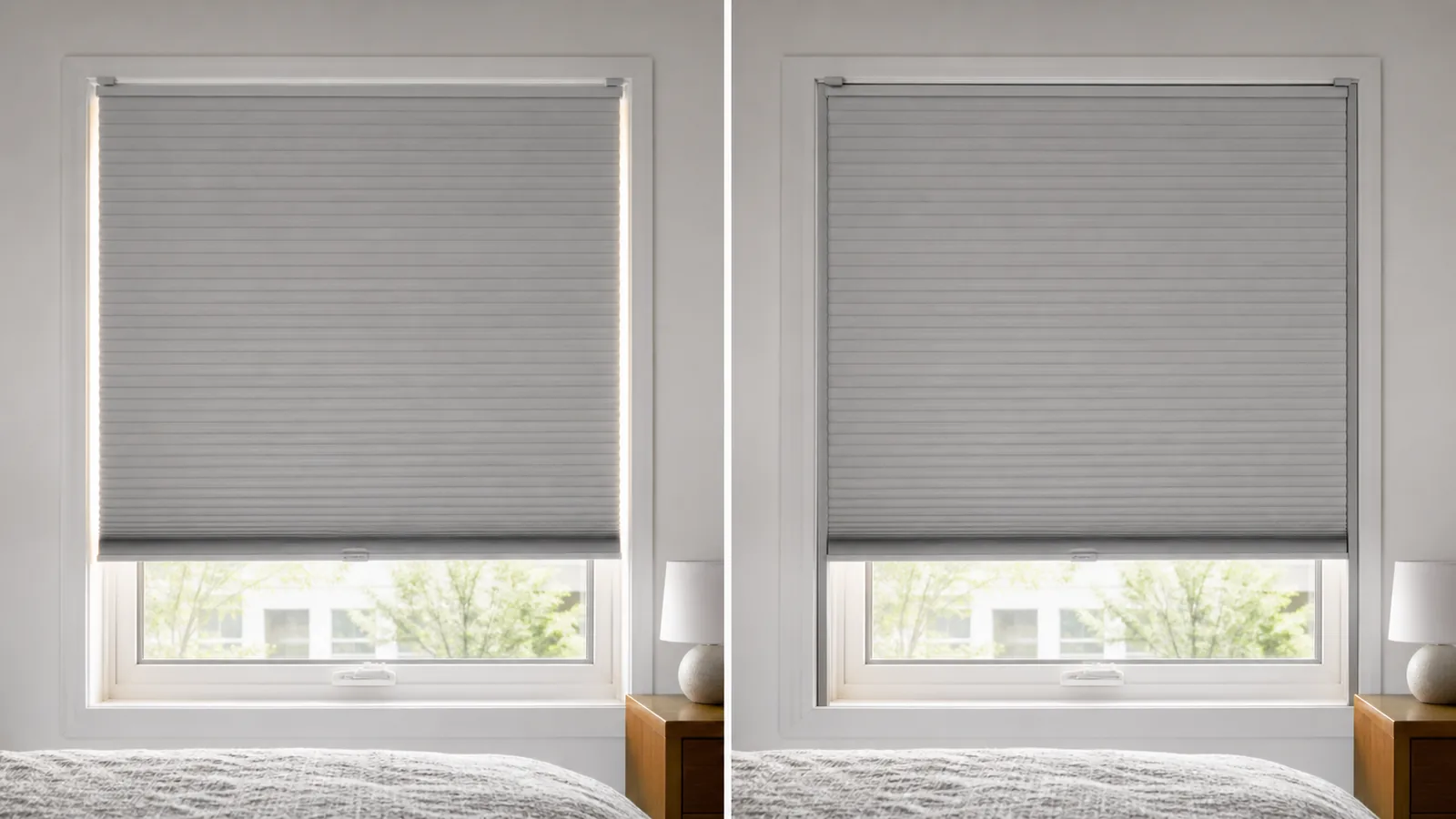
- Rooms where light enters mainly through uncovered side, top, or bottom gaps that the shade cannot overlap.
- Windows where the mount or fabric would obstruct locks, handles, cranks, ventilation, or emergency access.
- Decorative drapery projects where fabric, fullness, and room styling are the main goals.
- Professional darkroom, studio, or other applications that require a specified complete light-control system.
- Any surface or lease that does not permit the selected tension, clip, adhesive, or compression mount.
How to set it up
Step 1: Diagnose the light path
Check the room during the actual problem period. Separate light through the material from light around the edges, above or below the covering, and from other openings.
Step 2: Choose the intended mount
Decide whether the exact product will sit inside the frame or overlap it from outside. Confirm that its no-drill hardware is approved for the frame material, depth, and lease.
Step 3: Follow the manufacturer's measuring rules
Measure at every location required by the maker. Use its stated rounding, deduction, clearance, and size-selection method rather than subtracting a universal amount.
Step 4: Check hardware and safety clearance
Plan space for the headrail and moving shade while keeping locks, handles, cranks, ventilation, cords, and emergency access usable.
Step 5: Prepare and install as directed
Use only the preparation, placement, pressure, waiting, and assembly steps specified for the selected mount and surface.
Step 6: Test movement and remaining light
Raise and lower the shade several times, then check the room again during the bright period. Correct an installation issue before adding another layer.
Buying Notes
Blackout versus light-filtering material
Confirm that the exact fabric option is described as blackout. A similar color or cellular shape does not mean every option in the listing uses the same opacity.
Manufacturer measuring and deduction rules
Inside-mount and outside-mount products can use different measurement points, deductions, and clearance allowances. Follow the selected maker's instructions instead of applying a generic fraction.
Frame depth and mount contact
Compare the required depth and contact area with the actual frame. Trim, seals, slopes, damage, and uneven surfaces can reduce usable space.
Side-gap expectations
Ask how far the fabric sits inside the headrail and how much uncovered glass may remain. If narrow side gaps are the only remaining problem, review the removable side-track guide.
Window controls and egress
Confirm that the shade can move without blocking locks, handles, cranks, ventilation, or a required escape opening.
Child and cord safety
Prefer cordless operation where practical. If the product has cords, follow the maker's current safety and tensioning instructions and keep controls away from children.
Removal and surface instructions
Review removal before installation. Adhesive, clips, and compression hardware have different finish risks, and no method is compatible with every painted, stained, vinyl, or composite surface.
Daily reach and operation
Make sure furniture does not block the control and that the shade can be opened and closed without leaning, pulling sideways, or standing on an unstable surface.
Common Mistakes
Buying by the blackout label alone
The material can be opaque while the installed system still leaves visible edge gaps. Evaluate fabric, fit, mount, and coverage together.
Using a universal measuring deduction
Do not subtract a remembered amount from the opening. The manufacturer may already account for hardware, fabric width, or operating clearance.
Measuring at only one point
Frames can vary from top to bottom. Take every measurement required by the instructions and use the maker's rule for choosing among them.
Ignoring window hardware
A shade that covers a lock or crank creates a new problem. Check both the raised and lowered positions before installation.
Assuming no-drill means no surface risk
Compression, adhesive, and clip systems can still mark or stress an incompatible finish. Check the surface and lease before mounting.
Overlooking cord safety
Do not leave accessible loops or controls where children can reach them. Follow the exact safety setup for the product.
Adding side tracks before checking shade movement
A side-gap accessory needs clearance beside the moving fabric. Install and test the shade first, then decide whether a separate edge treatment fits.
Final Verdict
For a compatible rental bedroom, the SoloFave Pick is a no-drill blackout cellular shade measured and installed according to the specific product instructions. It gives the room an adjustable opaque covering without making a drilled bracket system the first step.
Skip it when the frame cannot support the mount, hardware or egress would be blocked, or the opening needs a more complete system. Treat remaining edge light as a separate fit problem rather than assuming a second blackout fabric will correct it.
FAQ
What is the best way to black out a bedroom without drilling?
For many compatible rental windows, start with a no-drill blackout cellular shade. Confirm the blackout fabric option, follow the manufacturer's measuring rules, and check the installed edge coverage before deciding whether another layer is needed.
Does no-drill mean the window frame cannot be marked?
No. It means drilled fasteners are not required. Adhesive, tension, compression, and clip systems can still affect incompatible, weak, dirty, damp, or delicate finishes, so check the exact surface and removal instructions.
How should I measure for a no-drill blackout shade?
Choose the exact mounting position first, then measure at every point required by the manufacturer. Follow that product's rules for rounding, deductions, frame depth, and operating clearance rather than using a universal adjustment.
Will a blackout shade make the room completely dark?
Not necessarily. Opaque fabric can reduce light through the covering, but side gaps, uneven frames, uncovered panes, and other openings may remain visible. Professional darkness requirements may need a specified complete system.
What should I check for child safety?
Prefer a cordless design where practical. For any corded product, follow the current manufacturer instructions for cord control and placement, and keep loops and controls out of children's reach.
What if light still leaks around the sides?
First confirm that the shade is level, correctly sized, and moving freely. If narrow side gaps remain, the light-gap guide explains when removable side tracks may fit without interfering with the blind.
Share this fix
Copy the key takeaway with a source link, or share the full guide.
Related SoloFave Fixes
How to Get Nighttime Window Privacy Without Drilling
Improve nighttime window privacy with one opaque no-drill shade while checking lighting conditions, edge coverage, and rental compatibility.
Read the guideHow to Insulate Rental Windows Without Drilling
Make a hot or cold rental room more comfortable with one close-fitting window covering that installs without permanent drilling.
Read the guideHow to Choose a Renter-Friendly Window Covering
Match the room's real window problem to one compatible no-drill covering, with clear checks for fabric, fit, mount, hardware, and removal.
Read the guideHow to Stop Light Leaking Around Blackout Blinds
Stop side-edge light from slipping around blackout blinds with one removable, renter-friendly fix.
Read the guideHow to Make a Bedroom Dark During the Day
Create a darker bedroom for daytime sleep with one removable covering that blocks light around the full window opening.
Read the guideDisclosure
This page may include paid links. We may earn a commission if you buy through them, at no extra cost to you.